 NorthpointConcrete & Flatwork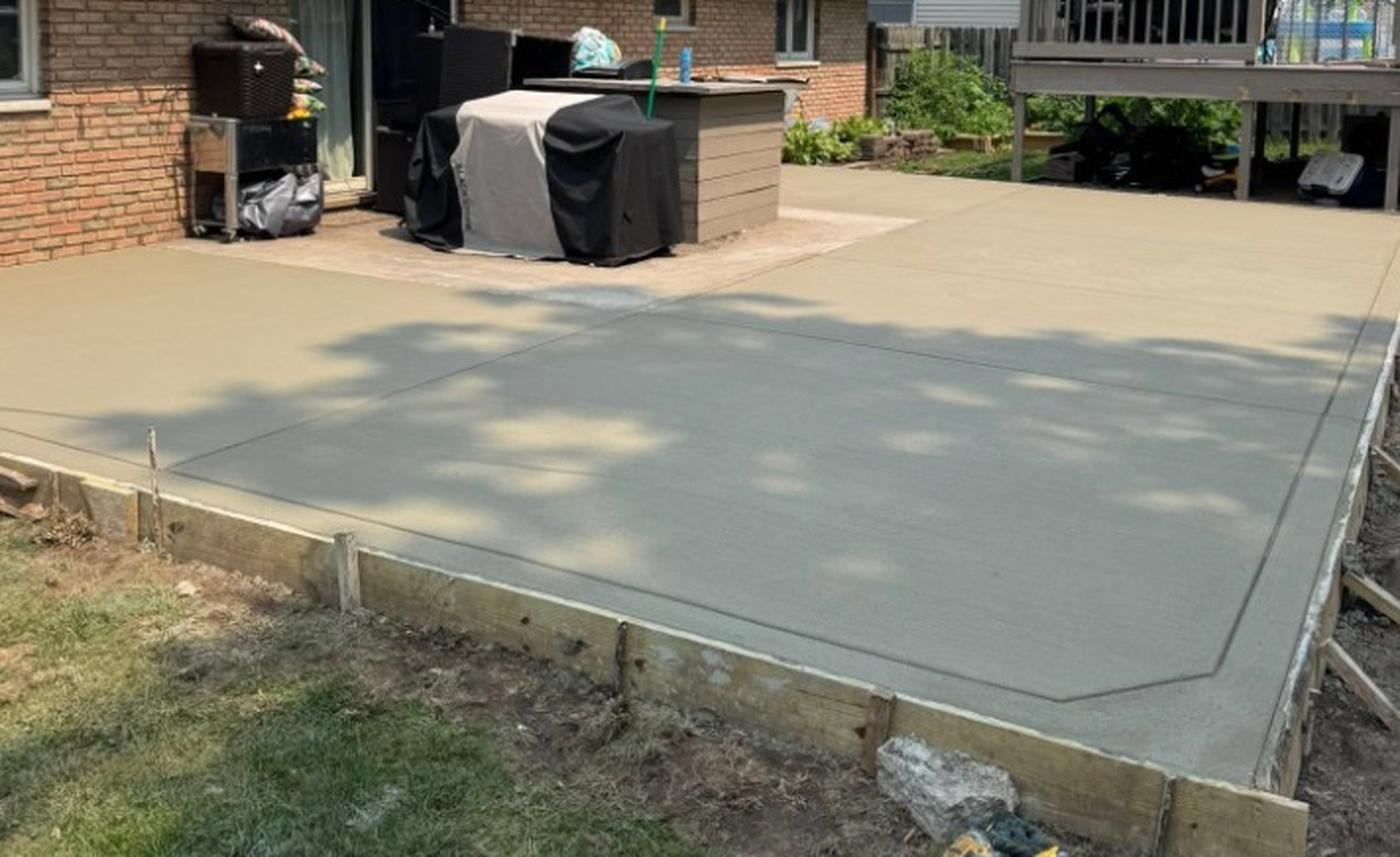
Concrete Driveway Contractor · Lake County IL & Kenosha County WI
Concrete Driveways in Waukegan, IL
New driveways, tear-out and replacement, poured on a compacted base built for Lake County freeze-thaw.
A driveway is the biggest slab most homes will ever have and the one that takes the worst of a Lake County winter. Freeze-thaw runs from November into March, salt goes down every storm, and the clay under most of this county holds water instead of draining it. A driveway poured properly lasts thirty years. One poured on a rushed base starts spidering in three.
We install and replace concrete driveways across Lake County and up into Kenosha County. The visible part is one day of pouring. The part that decides whether it survives is everything that happens before the truck shows up.
New driveways and full replacement
New pour or tear-out and replace, the work that matters happens before the concrete arrives. We excavate past the disturbed material, compact a stone base in lifts, set forms to a drainage slope, and reinforce so the slab carries real vehicle weight.
Old driveways come out rather than getting poured over. Pouring on top of a failed slab means pouring on top of the failed base underneath it, and the new concrete cracks along the same lines within a couple of seasons.
Base prep, the part nobody sees
Most cracked driveways around here went down straight on clay with nothing under them. Clay holds water, water freezes, the slab lifts, and once it lifts it cracks. We dig past that layer, bring in graded stone, and compact it in lifts with a plate compactor rather than dumping it and driving over it once.
Depth follows what the driveway carries. Standard residential is a four-inch slab on compacted base. A work truck, a boat trailer or an RV means thicker concrete and more steel, and that gets decided at the estimate rather than after.
Reinforcement, thickness and control joints
Rebar on chairs or wire mesh pulled up into the middle of the slab holds concrete together when it moves. Mesh lying flat on the ground does nothing at all, which is why we set it properly.
Concrete will crack. Joints decide where. Cut to roughly a quarter of the slab depth, on a grid sized to the pour, inside the same-day window, and it cracks along a line nobody notices. Cut shallow or a day late and it picks its own path straight across the middle.
Salt, scaling and Lake Michigan winters
Exterior concrete in northern Illinois needs air entrainment. Those microscopic bubbles give freezing water somewhere to expand into instead of pushing the surface off in flakes. We spec air-entrained mix on every exterior pour, no exceptions.
The other half is finishing discipline. Troweling while bleed water is still sitting on the slab works that water back into the top layer and guarantees scaling. We wait, every time, even when it costs daylight.
New concrete should not see de-icing salt through its first winter and should be sealed before the second. We say that at the estimate, not after the surface has started flaking.
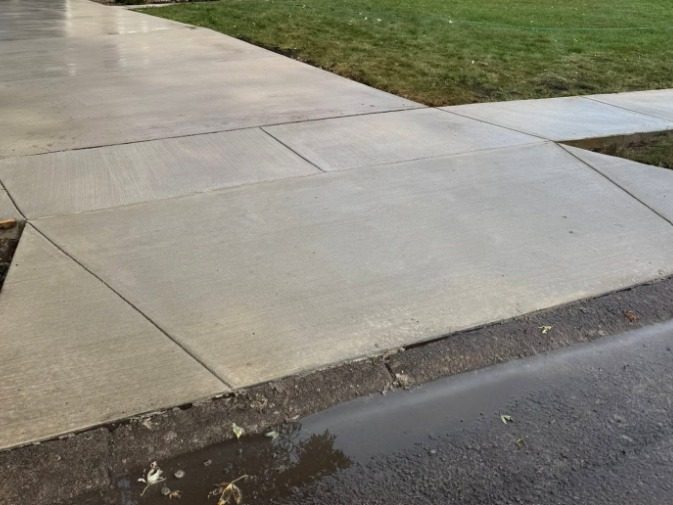
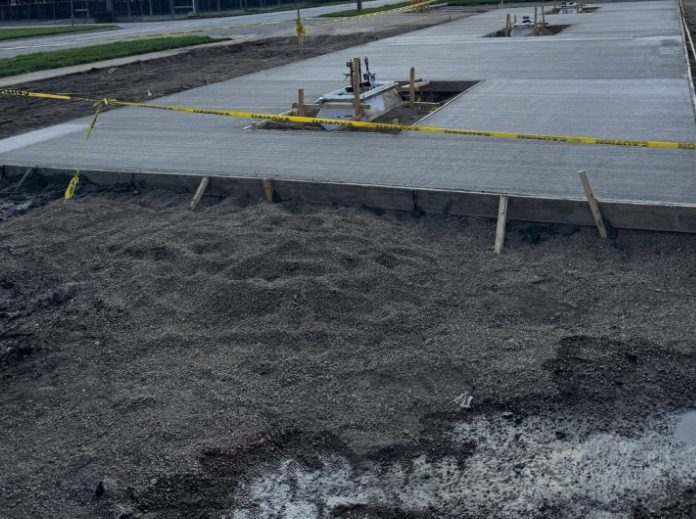
How we run a concrete driveways job
- Walk the drive and quoteWe look at how the old slab failed, where water goes, and what the driveway carries, then confirm thickness, reinforcement and finish.
- Tear out and haulThe old slab is broken out and hauled off, along with the failed base underneath it.
- Excavate and compactDown past disturbed material, graded stone in, compacted in lifts.
- Form and reinforceForms set to the drainage slope. Rebar or mesh on chairs, not on the ground.
- Pour, finish, jointPlaced, screeded, floated and finished. Control joints cut the same day.
- Cure and cleanCured to the weather, edges cleaned, debris gone. We tell you when to walk it and when to drive it.
What affects the price
- Square footage and slab thickness
- Whether an existing driveway has to come out
- How much failed base has to be dug out and replaced
- Mesh versus rebar and spacing
- Finish: broom, troweled, exposed aggregate or stamped
- Apron work, which may need a village permit
See the pricing page for how we quote, or send photos and a rough size for a real number.
Why concrete fails in Lake County
Lake County sits on clay that holds water instead of draining it, and the freeze-thaw cycle here runs from November into March. Add the salt that goes down after every storm and you have the three things that kill concrete. Slabs that survive are air-entrained, poured on a compacted stone base, pitched so water leaves, jointed on a proper grid, and kept off salt through their first winter.
- Freeze-thaw scaling. Water gets into the surface, freezes and lifts the top layer off in flakes. It comes from too much water in the mix, finishing while bleed water is still on the slab, or skipping the air entrainment exterior concrete needs here.
- Road salt damage. De-icing salt accelerates surface scaling badly. New concrete should not see salt through its first winter and should be sealed before the second.
- Slabs poured on clay. Most cracked driveways in this county went down on disturbed clay with no compacted stone under them. Clay holds water, water freezes, the slab lifts.
- Control joints cut late or shallow. Concrete is going to crack. Joints decide where. Cut at the wrong depth or a day late and the slab picks its own line across the middle.
- Water pitched toward the house. A patio or walk sloping the wrong way puts water against the foundation every time it rains and freezes there in January.
- Settled and heaved sections. Where the slab is sound but has dropped, lifting or a single section replacement costs a fraction of a full tear-out.
Before we arrive
- Clear vehicles, trailers and anything stored on the slab the night before
- Leave an outside spigot reachable
- Mark any private irrigation, invisible fence or low-voltage lighting lines in the work area
- Plan for no vehicle access across the work for about a week after the pour
- Keep pets and kids off fresh concrete until we say it is ready
- If a village permit is involved, allow time for it before the pour date
Concrete driveways across the area
We do this work throughout Lake County and up into Kenosha County. A lot of it lands in Paddock Lake, Kenosha and Lindenhurst, and we are regularly in Hawthorn Woods and North Chicago too.
Related work: Concrete patios, Stamped concrete and Sidewalks & walkways. See all services or the full service area.
Concrete driveways FAQ
How long does a concrete driveway take?
Two to three days of tear-out, base prep and pour work, plus cure time. Weather moves that. You get the full timeline at the estimate.
How long before I can drive on it?
About seven days in normal conditions for vehicle weight, though concrete keeps gaining strength for weeks. You can usually walk on it the next day.
How thick should a driveway be?
Four inches on a properly compacted base for standard residential use. Heavier loads mean thicker concrete and more reinforcement.
Can you pour over my old driveway?
No. Pouring over a failed slab means pouring over the failed base under it, and the new concrete cracks the same way. The old slab comes out.
When can you pour in Lake County?
Roughly April through November for exterior work. Cold-weather pours are possible with blankets and mix adjustments but they cost more and carry more risk.
Do I need a permit?
Work in the public way, including the apron, generally needs one. Replacement inside your property line usually does not. We check for your village before starting.
Concrete driveways by town
Each town has its own page for this service.
Lake County, Illinois
- Concrete driveways in Antioch
- Concrete driveways in Bannockburn
- Concrete driveways in Barrington
- Concrete driveways in Barrington Hills
- Concrete driveways in Beach Park
- Concrete driveways in Buffalo Grove
- Concrete driveways in Deer Park
- Concrete driveways in Deerfield
- Concrete driveways in Fox Lake
- Concrete driveways in Gages Lake
- Concrete driveways in Grayslake
- Concrete driveways in Green Oaks
- Concrete driveways in Gurnee
- Concrete driveways in Hainesville
- Concrete driveways in Hawthorn Woods
- Concrete driveways in Highland Park
- Concrete driveways in Highwood
- Concrete driveways in Indian Creek
- Concrete driveways in Ingleside
- Concrete driveways in Island Lake
- Concrete driveways in Kildeer
- Concrete driveways in Lake Barrington
- Concrete driveways in Lake Bluff
- Concrete driveways in Lake Forest
- Concrete driveways in Lake Villa
- Concrete driveways in Lake Zurich
- Concrete driveways in Lakemoor
- Concrete driveways in Libertyville
- Concrete driveways in Lincolnshire
- Concrete driveways in Lindenhurst
- Concrete driveways in Long Grove
- Concrete driveways in Mettawa
- Concrete driveways in Mundelein
- Concrete driveways in North Barrington
- Concrete driveways in North Chicago
- Concrete driveways in Old Mill Creek
- Concrete driveways in Park City
- Concrete driveways in Riverwoods
- Concrete driveways in Round Lake
- Concrete driveways in Round Lake Beach
- Concrete driveways in Round Lake Heights
- Concrete driveways in Round Lake Park
- Concrete driveways in Third Lake
- Concrete driveways in Tower Lakes
- Concrete driveways in Vernon Hills
- Concrete driveways in Volo
- Concrete driveways in Wadsworth
- Concrete driveways in Wauconda
- Concrete driveways in Waukegan
- Concrete driveways in Winthrop Harbor
- Concrete driveways in Zion
Kenosha County, Wisconsin
Concrete driveways done right
Free estimates across Lake County and Kenosha County.